Melatonin: A Circadian-Rhythm Research Guide
What is melatonin?
Melatonin is a hormone produced naturally by the pineal gland in response to darkness. It is the body’s principal signal of biological night, and it is studied as a central regulator of the circadian rhythm – the roughly 24-hour internal clock that governs the sleep-wake cycle and many other physiological processes. Beyond its timing role, melatonin is also investigated for antioxidant and cell-protective properties.
Studied mechanisms of action
In research models, melatonin acts at the MT1 and MT2 receptors, G-protein-coupled receptors concentrated in the brain regions that control circadian timing, particularly the suprachiasmatic nucleus. Through these receptors it is studied for shifting and stabilising the circadian clock and for promoting the onset of sleep. Independently of its receptors, melatonin is also studied as a direct scavenger of reactive oxygen species, giving it antioxidant activity that is investigated in cell-protection and ageing models. This combination of timekeeping and antioxidant roles is the basis of its broad research interest.
The state of the research
Melatonin has an extensive scientific literature in chronobiology, sleep research and antioxidant biology, and is one of the best-characterised endogenous signalling molecules. Within the research-compound community its use is experimental and model-dependent, with timing of administration being a particularly important variable given its circadian role. Results remain preclinical within this context.
Handling & storage for research
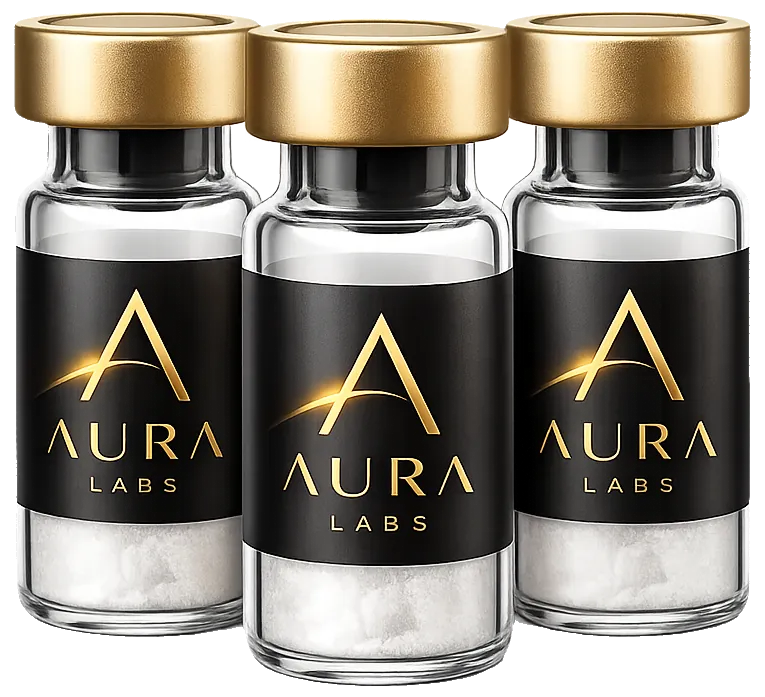
Supplied as a lyophilised powder. Store sealed vials cold and protected from light – melatonin is light-sensitive; reconstitute with bacteriostatic water for laboratory handling and keep the reconstituted solution refrigerated and shielded from light, using it within the appropriate window. Avoid repeated freeze-thaw cycles. Every Aura Labs lot is quality-checked before dispatch.
Why researchers choose Aura Labs
Aura Labs supplies research compounds across Southeast Asia with quality-checked products, a certificate of analysis where applicable, and discreet, fast regional dispatch. Accurate labelling and reproducible quality are the priorities researchers rely on for consistent results.
Disclaimer
This material is provided for laboratory and research use only. It is not a drug, supplement, cosmetic or food, and is not intended for human or animal consumption or for any diagnostic or therapeutic use. All information here is for educational purposes and describes preclinical research only.