
Acetic Acid Solution (0.6%): A Peptide Reconstitution Guide
What is acetic acid solution?
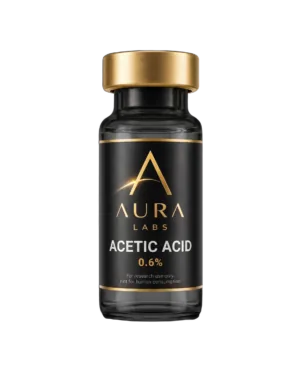
Acetic acid solution at a mild 0.6% concentration is a dilute acidic solvent used in the laboratory to reconstitute research peptides. While most peptides dissolve readily in bacteriostatic water, a number of compounds are poorly soluble at neutral pH and go into solution more reliably in a slightly acidic medium. A low-concentration acetic acid solution provides that acidity while remaining gentle enough for routine handling of sensitive peptides.
When researchers use it
In the laboratory, acetic acid solution is reached for when a peptide resists dissolving in plain bacteriostatic water — often signalled by cloudiness or visible particulate after mixing. Peptides with hydrophobic sequences or a tendency to aggregate are common candidates. Researchers typically use it to bring such a peptide fully into solution, sometimes followed by dilution with bacteriostatic water to reach a working concentration. It is a reconstitution aid rather than a compound under study in its own right.
Handling & storage
Store the solution sealed, cool and away from light. Because it is mildly acidic, handle it with the same care as other laboratory reagents and avoid contamination of the stock. Reconstitute peptides gently, without vigorous shaking, and keep reconstituted solutions refrigerated and used within the appropriate window. As with all reconstitution media, draw only what is needed and keep the vial sealed between uses.
Why researchers choose Aura Labs
Aura Labs supplies research peptides and the laboratory consumables that support them across Southeast Asia, with quality-checked products and discreet, fast regional dispatch. Reliable reconstitution media are part of a reproducible research workflow.
Disclaimer
This product is provided for laboratory and research use only. It is not a drug, supplement, cosmetic or food, and is not intended for human or animal consumption or for any diagnostic or therapeutic use. All information here is for educational purposes and describes laboratory handling only.